
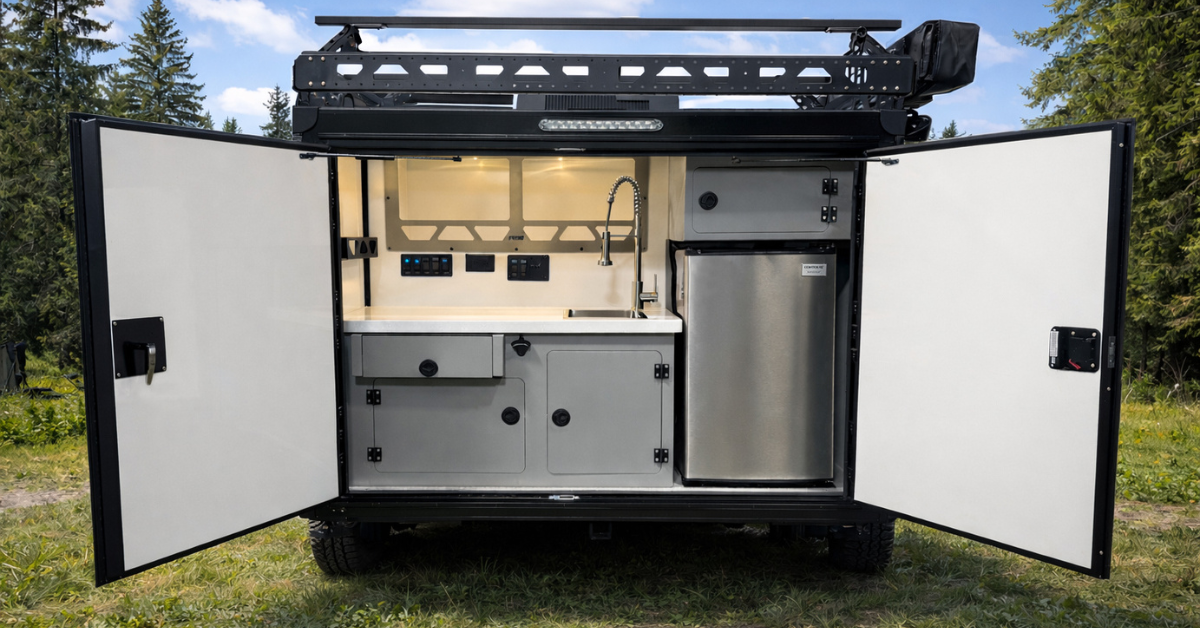
If your adventure trailer has been sitting all winter or only used a few times, spring is the perfect time for a full inspection. Completing a spring RV maintenance checklist helps prevent breakdowns, leaks, and costly repairs during camping season.
A little preparation now ensures your trailer is safe, clean, and ready for the road.
How to De-Winterize Your RV or Adventure Trailer
If your trailer has water tanks and was winterized, you’ll need to de-winterize your RV before camping. Wait until temperatures stay above freezing for at least 15 consecutive days.
Steps to De-Winterize Your Adventure Trailer
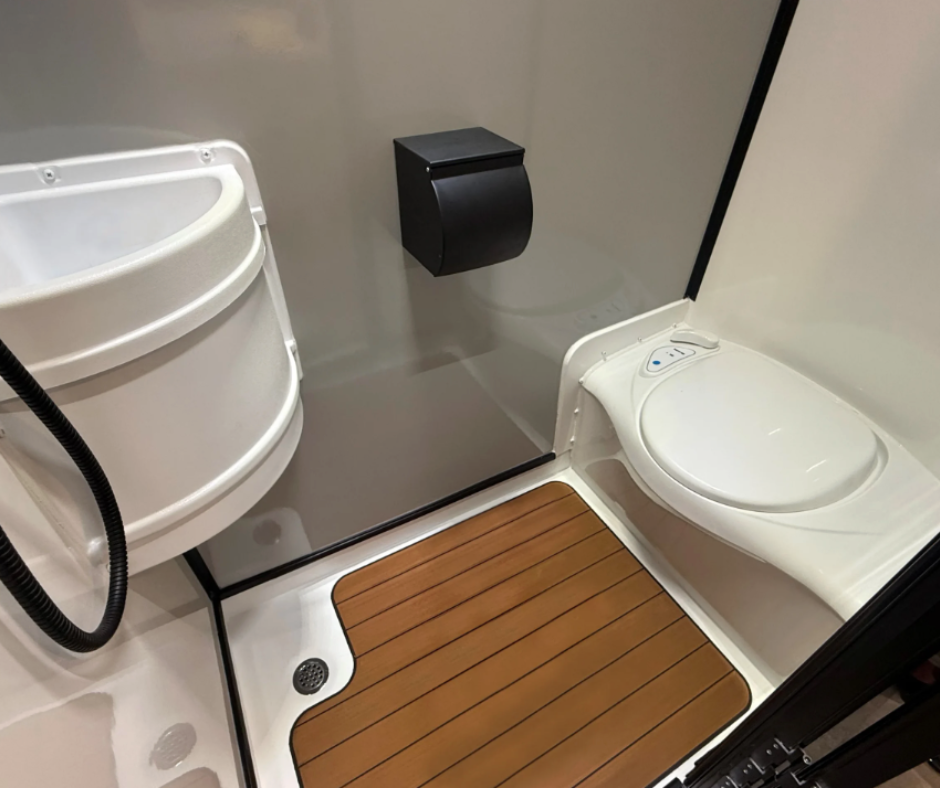
- Flush antifreeze from all faucets and the wet bath shower until water runs clear
- Sanitize the freshwater system with a diluted bleach solution to remove bacteria
- Inspect plumbing lines and fittings for leaks
- Check the water heater for leaks or damage
- Trailers with wet baths and water tanks should always be properly de-winterized before use.
Inspect Your RV Exterior
A spring inspection helps catch small issues before they become big problems. Check for exterior damage, loose seals or trim, signs of wear from the previous season and winter storage.
Encore RV’s adventure trailers feature one-piece fiberglass exterior sidewalls and roof that are exceptionally durable and highly resistant to leaks, making them ideal for off-grid travel. For added peace of mind, every Encore RV is backed by a transferable 2-year bumper-to-hitch warranty and a transferable 5-year structural warranty.
Check RV Tires Before Every Trip
Your trailer’s tires play a critical role in overall performance and reliability. Proper tire maintenance helps ensure smooth towing and optimal fuel efficiency.
Before every trip, inspect your tires for cracks, dry rot, and uneven tread wear. Be sure to check lugnut torque and tire pressure – including the spare – the manufacturer’s recommended specifications.
Lubricate Moving Parts
Regular lubrication helps extend the life of your trailer’s components and keeps everything operating smoothly.
Be sure to lubricate door and storage hinges, and stabilizer jacks as part of your routine maintenance. Clean any rust or corrosion discovered on any components to extend their life and performance.
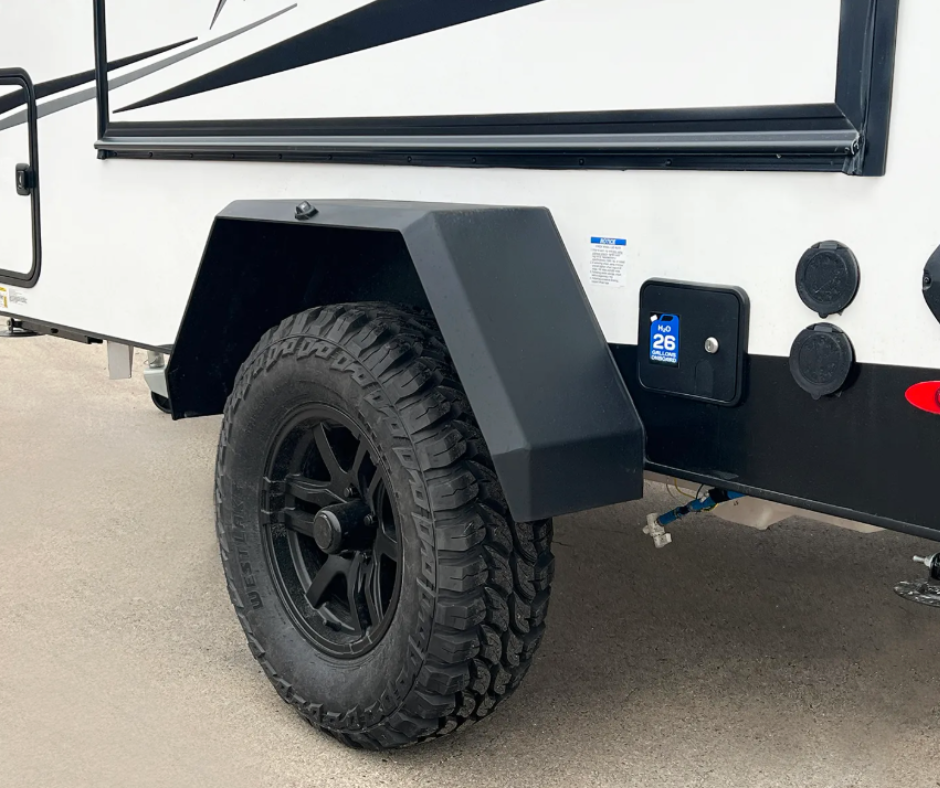
For trailers equipped with the Overland Package, the Lock-N-Roll articulating hitch should be greased every 3–5 towing trips or every 2,000–3,000 miles. If you’ve been off-road or overlanding—or traveled through sand, dust, mud, water crossings, washboard roads, or rocky terrain—grease the hitch after each trip. Use a high-quality synthetic grease.
The Timbren Axle-Less suspension zerks should be greased at least twice per year or every 3,000–6,000 miles. In harsh environments, including sand, dust, mud, water crossings, or rough terrain, more frequent lubrication is recommended. The same high-quality lithium or synthetic grease may be used.
Wheel bearings should be cleaned and lubricated every 12 months or 12,000 miles, and more often when subjected to frequent towing, long highway trips, heavy water exposure, dusty conditions, or off-road use. Use a premium Synthetic Trailer/Wheel Bearing Grease for the best performance.
Staying on top of lubrication helps prevent squeaks, binding, and unnecessary wear while keeping your trailer ready for the next adventure.
Inspect Your RV Electrical System
As part of routine RV maintenance, owners should regularly inspect the electrical system for obvious issues. Check the batteries for corrosion, loose connections, or damage, and make sure cables are tight and secure. Inspect the shore power cord, plug, and inlet for wear, heat damage, or loose fittings. Inside the RV, look at the breaker panel and fuse block for tripped breakers, blown fuses, or signs of overheating.
Owners should also verify normal operation by plugging into shore power and confirming outlets, GFCIs, and appliances work properly, then checking that lights, pumps, and other 12-volt systems operate correctly on battery power. A quick visual check of exterior lights, solar wiring (if equipped), and exposed wiring underneath the RV helps catch problems early and keeps the electrical system safe and reliable.
Test RV Appliances
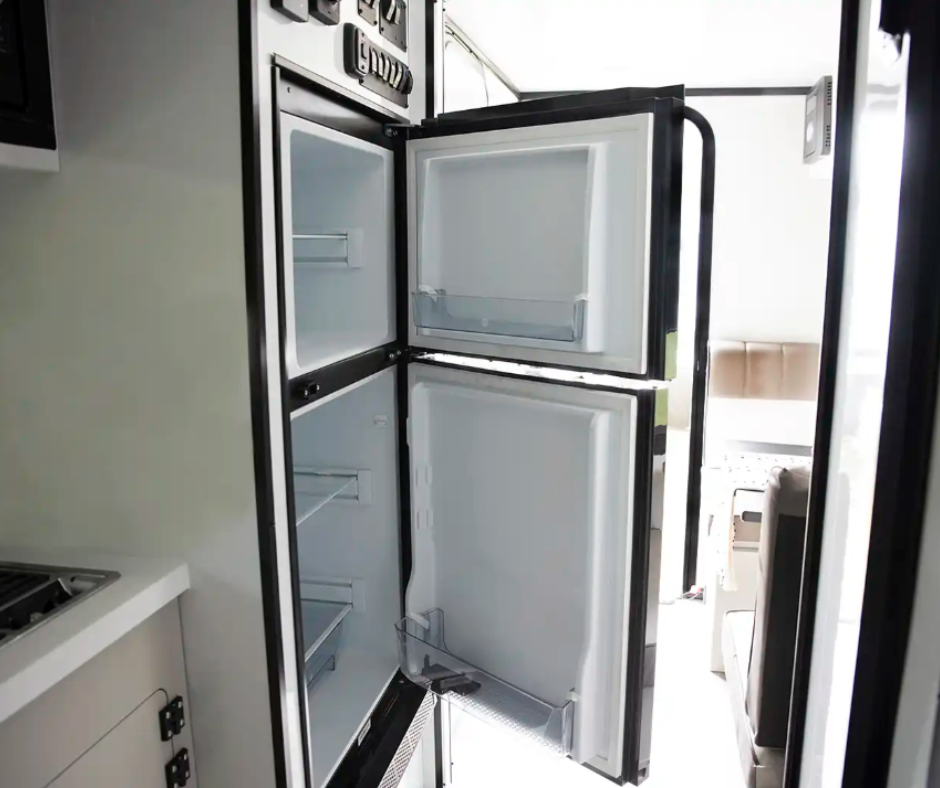
Before heading out, test all major appliances (furnace, water heater, and refrigerator) to confirm they are working properly.
Testing ahead of time prevents surprises at the campground.
Clean and Protect Your Trailer
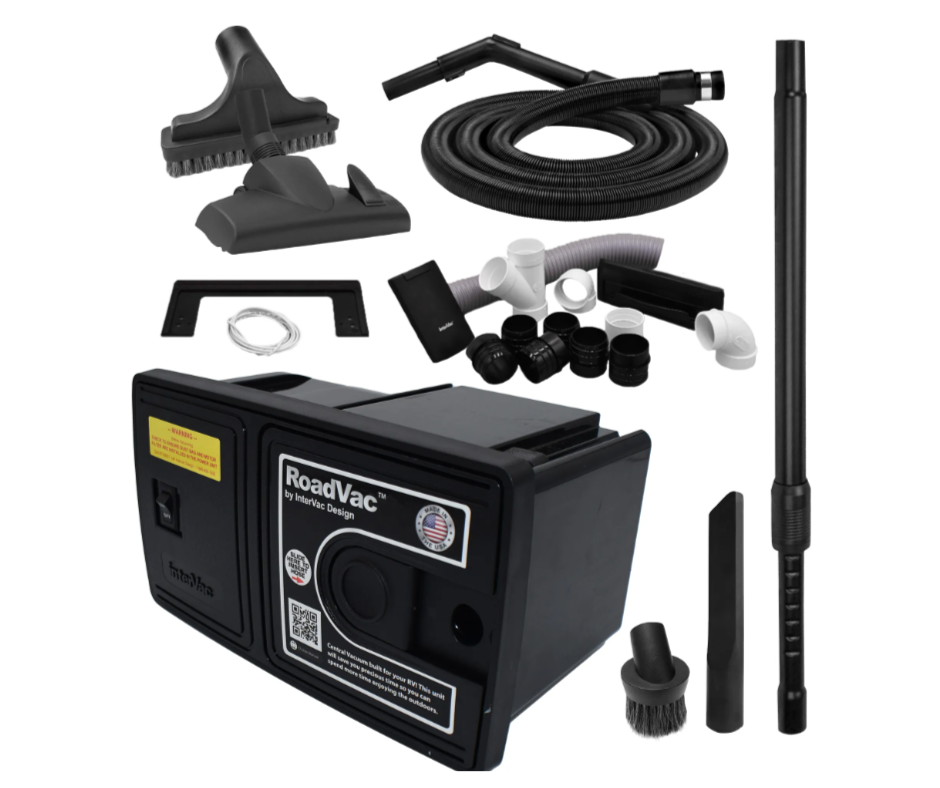
Finish your prep with a thorough interior and exterior cleaning. A compact system like the InterVac Vacuum Kit works well for keeping interiors tidy.
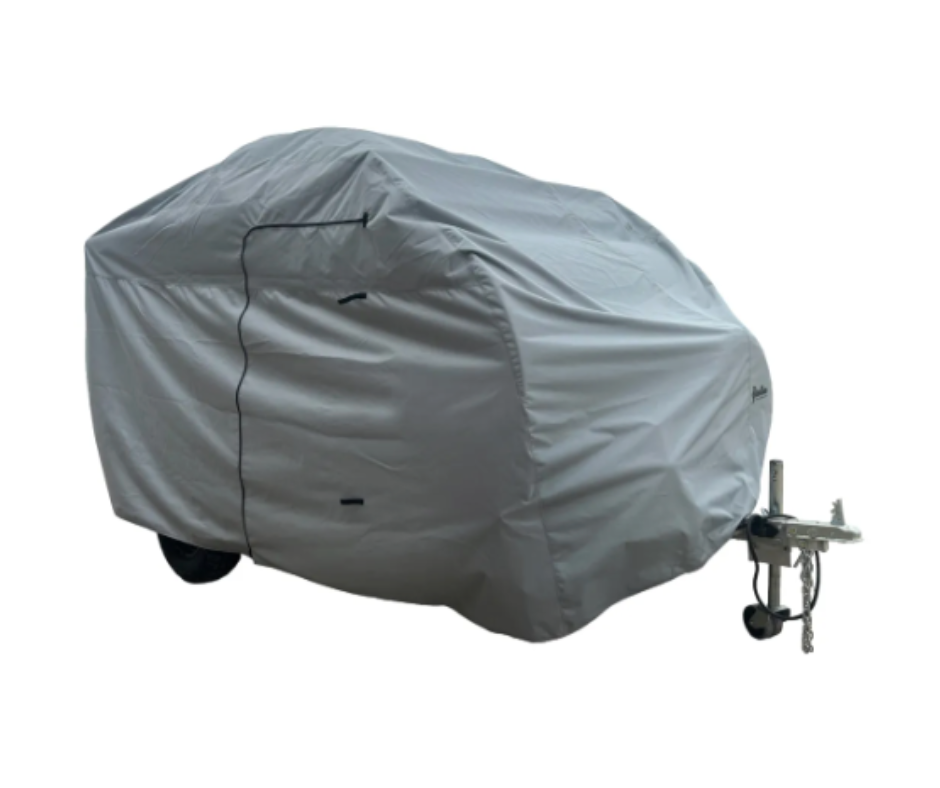
Many adventure trailers fit in standard garages, which helps protect them from the elements. If indoor storage isn’t an option, a custom-fit trailer cover is a great way to guard against dirt, moisture, and weather between trips.
Start the Season with Confidence
Completing a spring RV maintenance routine helps protect your investment and ensures worry-free travel. Whether you’re planning weekend getaways or extended off-grid adventures, a well-maintained trailer makes every trip better.
Taking the time to inspect, clean, and service your adventure trailer now means more time enjoying the road later.
How RV Converters and Shore Power Charging Work
Learn how an RV converter uses shore power to run 12V systems, charge your batteries, and safely maintain lithium battery banks.
RV Battery Monitors Explained: How to Accurately Track Your Power Off-Grid
Traditional RV battery gauges can be misleading, especially when you’re relying on lithium batteries for off-grid camping. Learn how RV battery monitors and the Victron SmartShunt provide accurate, real-time insights into your trailer’s power system.
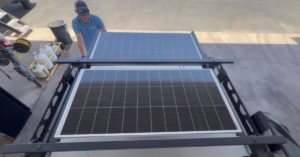
How RV Solar Charging Works: Understanding MPPT Controllers
Discover how an MPPT controller helps your RV solar charging system capture more energy, charge batteries efficiently, and keep you powered during off-grid adventures.