Whether you’re camping off-grid for a weekend or spending extended time away from shore power, understanding how your RV’s solar charging system works can help you get the most from your batteries and solar panels. One of the most important components in that system is the MPPT controller.
Encore RV’s trailers are equipped with advanced solar charging systems that utilize MPPT (Maximum Power Point Tracking) technology. Compared to many traditional RV solar systems, MPPT controllers can harvest more energy from the sun and charge batteries more efficiently, helping you stay powered longer during your adventures.
In this blog, we’ll explain how RV solar charging works, what an MPPT controller does, and why it plays an important role in maximizing your off-grid camping experience.
How RV Solar Charging Works
RV solar panels generate electricity when exposed to sunlight. That electricity flows through a solar charge controller before reaching the batteries.
The solar charge controller plays an important role in the system. It regulates the voltage and current coming from the solar panels to ensure the batteries receive the correct charging levels.
Without a charge controller, the voltage produced by solar panels could damage the batteries or the electrical system. The controller ensures the energy coming from the panels is delivered safely and efficiently.
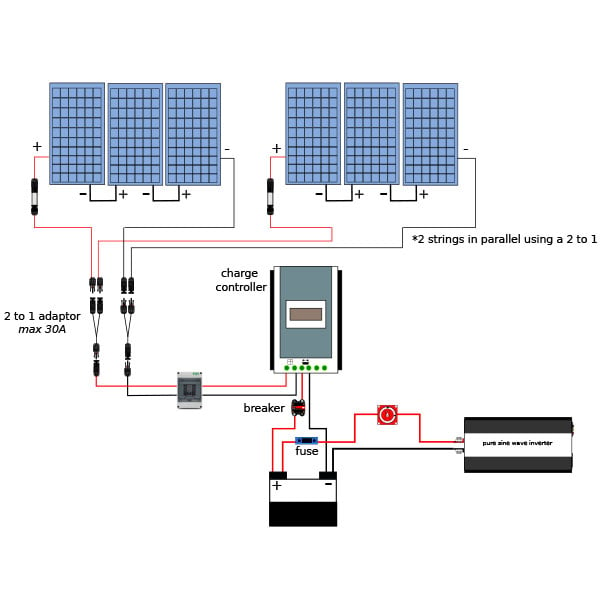
Photo Source: San Tan Solar
The Role of the Solar Charge Controller
You can think of the solar charge controller as the manager of the RV solar system. It controls how power flows from the panels to the batteries and ensures everything operates properly.
A solar charge controller performs several key functions:
- Regulates voltage coming from the solar panels
- Protects the batteries from overcharging
- Manages proper battery charging stages
- Maximizes the amount of energy harvested from the panels
By carefully managing this energy flow, the controller ensures the solar system operates efficiently while protecting the battery bank.
Two Types of Solar Controllers
PWM Controllers (Pulse Width Modulation)
PWM controllers are the older, simpler technology. While they work, they are less efficient and leave some of the available solar energy unused.
MPPT Controllers (Maximum Power Point Tracking)
Encore trailers use MPPT technology, which is a more advanced and efficient method of solar charging.
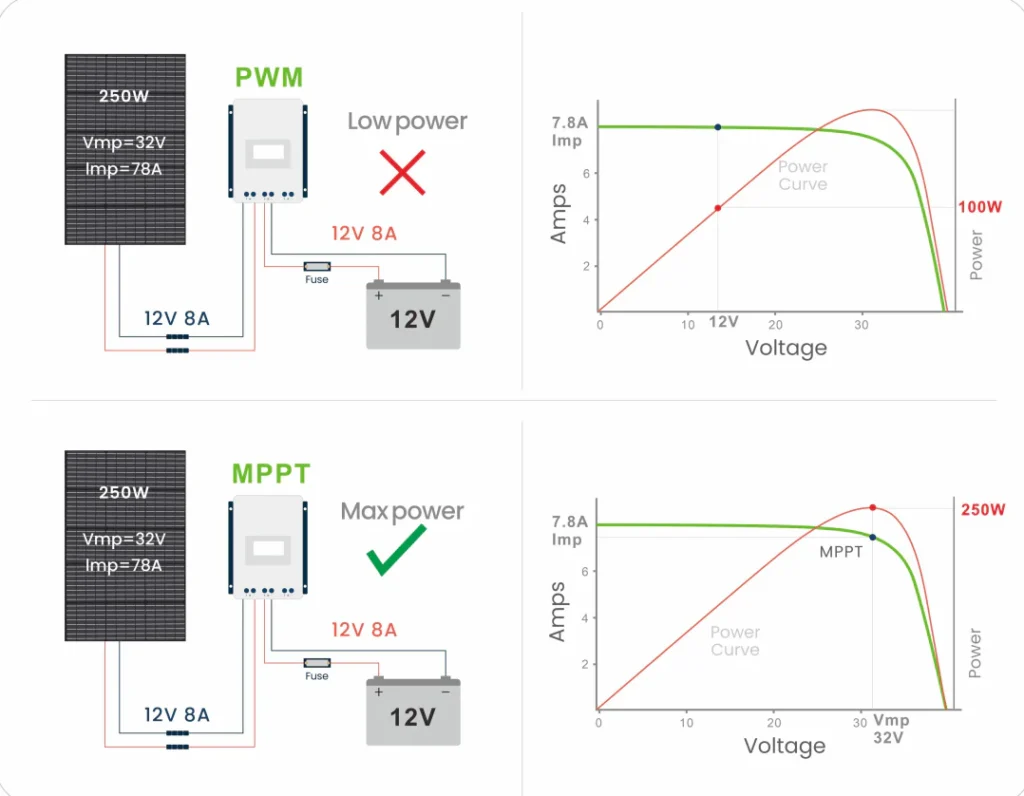
Photo Source: Growatt Portable
What Does MPPT Mean?
MPPT stands for Maximum Power Point Tracking.
Solar panels produce power at different voltages depending on sunlight conditions. An MPPT controller constantly monitors the power coming from the panels and adjusts the system to operate at the point where the panels produce the most usable energy.
Once that optimal power point is identified, the controller converts the available energy into the proper charging voltage for the batteries. This process allows more of the solar panel’s energy to reach the battery bank.
Why MPPT Is More Efficient and Better for RVing Off-Grid
A typical solar panel may produce around 18–20 volts in full sunlight, while lithium batteries charge at approximately 14.2–14.6 volts. A basic PWM controller simply reduces the panel voltage down to the battery voltage. When this happens, some of the available solar energy is lost. An MPPT controller works differently. Instead of wasting that extra voltage, it converts the excess energy into additional charging current.
This allows the system to capture 15–30% more energy compared to a traditional PWM controller.
Benefits of MPPT Solar Charging for RV Owners
Using MPPT technology provides several important advantages for Encore owners.
More Energy From Your RV’s Solar Panels: MPPT technology makes the most of the power your solar panels produce, helping charge your RV’s batteries more efficiently throughout the day.
Better Performance in Cloudy or Low-Light Conditions:
MPPT systems perform better when sunlight conditions are less than ideal, such as:
- Early morning and late afternoon sunlight
- Cloudy and overcast weather
This allows solar charging to continue even when the sun isn’t at full strength.
Faster Battery Charging: Because more energy reaches the batteries, they can recharge more quickly.
Optimized for Lithium Batteries: MPPT controllers charge lithium batteries the way they’re designed to be charged, helping improve performance, extend battery life, and ensure safe operation.
How Solar Charging Helps While Camping
When camping off-grid, the solar system continuously charges the batteries during daylight hours. This helps power many of the trailer’s 12-volt systems, including refrigerators interior lighting, water pumps, fans, and device charging.
Depending on sunlight conditions and energy usage, solar can replace much of the energy used during the day and extend how long owners can comfortably camp without shore power.
Solar is Designed to Work with our Entire Electrical System
Encore RV’s electrical systems are designed so multiple charging sources can work together, including:
- Solar charging
- Shore power when plugged into campground electricity
- DC-to-DC charging while towing
Together, these systems help ensure the batteries stay charged whether the trailer is driving, parked off-grid, or plugged in at a campsite.
The Encore Advantage
Encore solar systems use MPPT charging technology to capture the most energy possible from the sun and store it in the battery bank.
This provides several benefits:
- More efficient solar energy harvesting
- Faster battery charging
- Better performance in changing sunlight conditions
- Proper charging for lithium battery systems
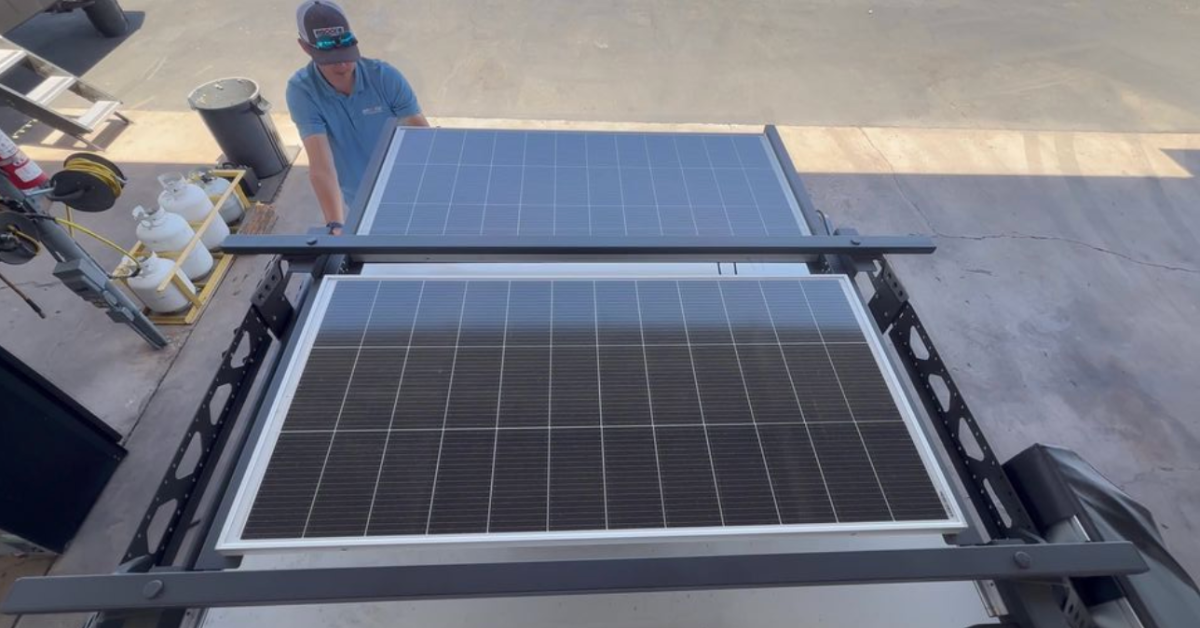
Another advantage of Encore’s RV solar system is our slide-out solar panel design. This feature makes it easy to deploy and store your solar panels while maximizing available space. By allowing you to travel with two solar panels in a compact footprint, you can enjoy increased solar charging capacity without sacrificing valuable room on your trailer.
By combining solar charging with lithium batteries and advanced charging systems, Encore trailers deliver an electrical system designed to keep owners powered wherever their adventures take them.