Understanding DC-to-DC Charging is an essential part of RV ownership, especially if you’re running on lithium batteries.
A common misconception is that your trailer batteries automatically charge from your tow vehicle while driving. In reality, most RVs don’t properly charge their batteries through the standard 7-way connection.
That means you could be driving for hours and still arrive at your campsite without a full charge.
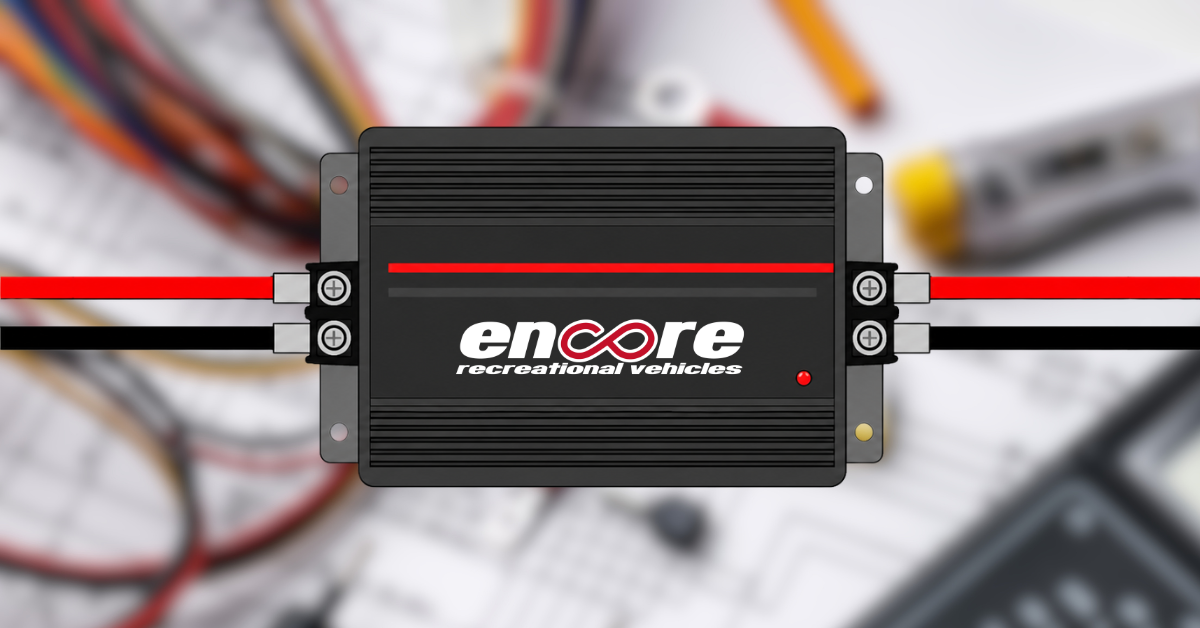
To solve this problem, and to make understanding DC-to-DC charging in real-world RV use easier, Encore trailers include a Victron 12-amp DC-to-DC charger as part of their standard electrical system. This allows your batteries to charge properly while towing and helps protect your electrical systems.
Why Traditional RV Charging Falls Short & Why Understanding DC-to-DC Charging Matters
Most RVs attempt to charge the trailer battery through the 7-way connector that links the tow vehicle and trailer.
While this system worked for older lead-acid batteries, it falls short with modern lithium batteries. This is because lithium batteries require a higher charging voltage (Typically, between 14.2–14.6 volts during the main charging stage).
That’s simply not enough to properly charge a lithium battery.
What causes the voltage drop?
- Long wiring runs between vehicle and trailer
- Smaller factory wiring
- Resistance through connectors
- Smart alternators designed for fuel efficiency
Without fully understanding DC-to-DC charging, it’s easy to assume everything is working properly. When in reality, your batteries may never reach a full charge.
What Happens Without a DC-to-DC Charger
Without a proper DC-to-DC charging setup, your battery system can struggle to keep up, especially while in use.
For example:
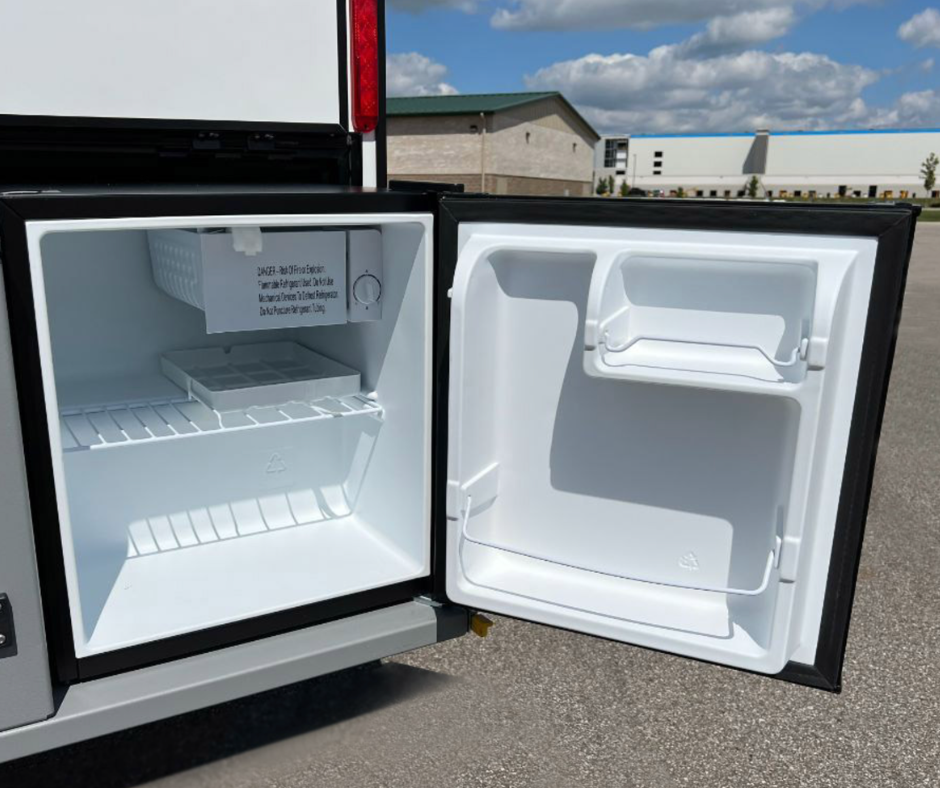
- Many RVs run a 12V refrigerator while driving
- These can draw 10-15 amps continuously
Meanwhile, your tow vehicle may only supply:
- 5-10 amps through the 7-way connection
That means your system could be using more power than it’s receiving.
The result: You might actually lose battery charge while driving.
Many RV owners arrive at camp with less power than when they started, without even realizing it.
How a DC-to-DC Charger Solves the Problem
A DC-to-DC charger acts as a smart power converter between your tow vehicle and your trailer batteries.
Think of it like a translator. It takes inconsistent or insufficient power and converts it into exactly what your batteries need.
Instead of sending raw vehicle voltage directly to the battery, it:
- Receives power from the tow vehicle
- Converts it to the correct lithium charging voltage
- Delivers a controlled and consistent charging current
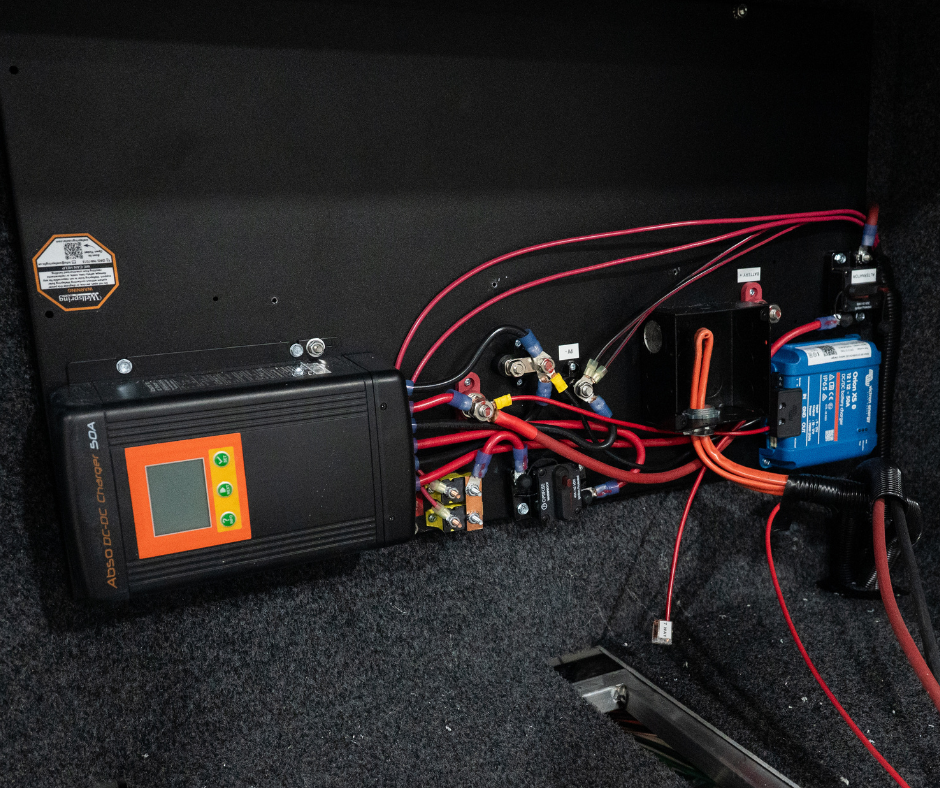
The Victron DC-to-DC charger used in Encore trailers boosts incoming voltage to the proper level, allowing your batteries to charge correctly while towing.
Protecting Both Electrical Systems
Another major benefit of understanding DC-to-DC charging is electrical system protection.
In traditional setups, the trailer battery is directly connected to the vehicle, which can create issues like:
- Excessive current draw from the alternator
- Voltage fluctuations
- Electrical interference between systems
A DC-to-DC charger acts as a controlled gateway between the two systems.
Key benefits include:
- Protecting the tow vehicle by limiting how much current is drawn from the alternator
- Protecting the trailer by delivering stable and regulated voltage to the batteries
- Preventing back feeding by stopping power from flowing back into the vehicle when it’s off
Why Encore Uses a 12-Amp DC-to-DC Charger
Encore systems are designed to work with the standard RV 7-way connection. That connection typically isn’t built to handle high current safely.
A 12-amp DC-to-DC charger provides:
- Reliable charging performance
- Compatibility with factory wiring
- No need for major electrical upgrades
Higher-capacity chargers can be used with dedicated wiring (like Anderson connectors), but Encore’s system is optimized for real-world usability and efficiency.
The Encore Advantage
The Victron DC-to-DC charger ensures that Encore owners arrive at camp with batteries that are properly charged and ready to use.
Key benefits include:
- Proper lithium battery charging while towing
- Stable and regulated charging voltage
- Compatibility with modern smart alternators
- Protection for both the tow vehicle and trailer electrical systems
- Improved off-grid readiness upon arrival
By integrating a DC-to-DC charger into the electrical system from the beginning, Encore trailers deliver a more reliable and more capable power system for modern RV travel.
This video does a great job explaining the benefits of the Victron DC-to-DC charger used in Encore trailers. For RV owners who don’t already have an Encore off-grid travel trailer, it also walks through how this upgrade can improve your electrical system.
If you already own an Encore, you’re in luck because your trailer already comes fully equipped with this upgrade from the factory.
Frequently Asked Questions About DC-to-DC Charging
Q: What is DC-to-DC charging in an RV?
A: It’s a system that converts power from your tow vehicle into the correct voltage and current needed to properly charge your trailer batteries.
Q. Do I need a DC-to-DC charger for lithium batteries?
A. Yes. Lithium batteries require higher voltage than most standard RV charging systems can provide.
Q. Will my tow vehicle charge my trailer battery?
A. Not effectively on its own. The standard 7-way connection usually doesn’t deliver enough voltage or current.
Q. How many amps should a DC-to-DC charger be?
A. It depends on your setup, but 12 amps is a safe and effective option for standard RV wiring systems.
Final Thoughts on Understanding DC-to-DC Charging
Understanding DC-to-DC charging helps you avoid one of the most common RV power issues which is arriving at your destination with undercharged batteries or even dead batteries.
If you’re running lithium batteries or relying on power while traveling, a DC-to-DC charger isn’t just helpful, it’s essential.